


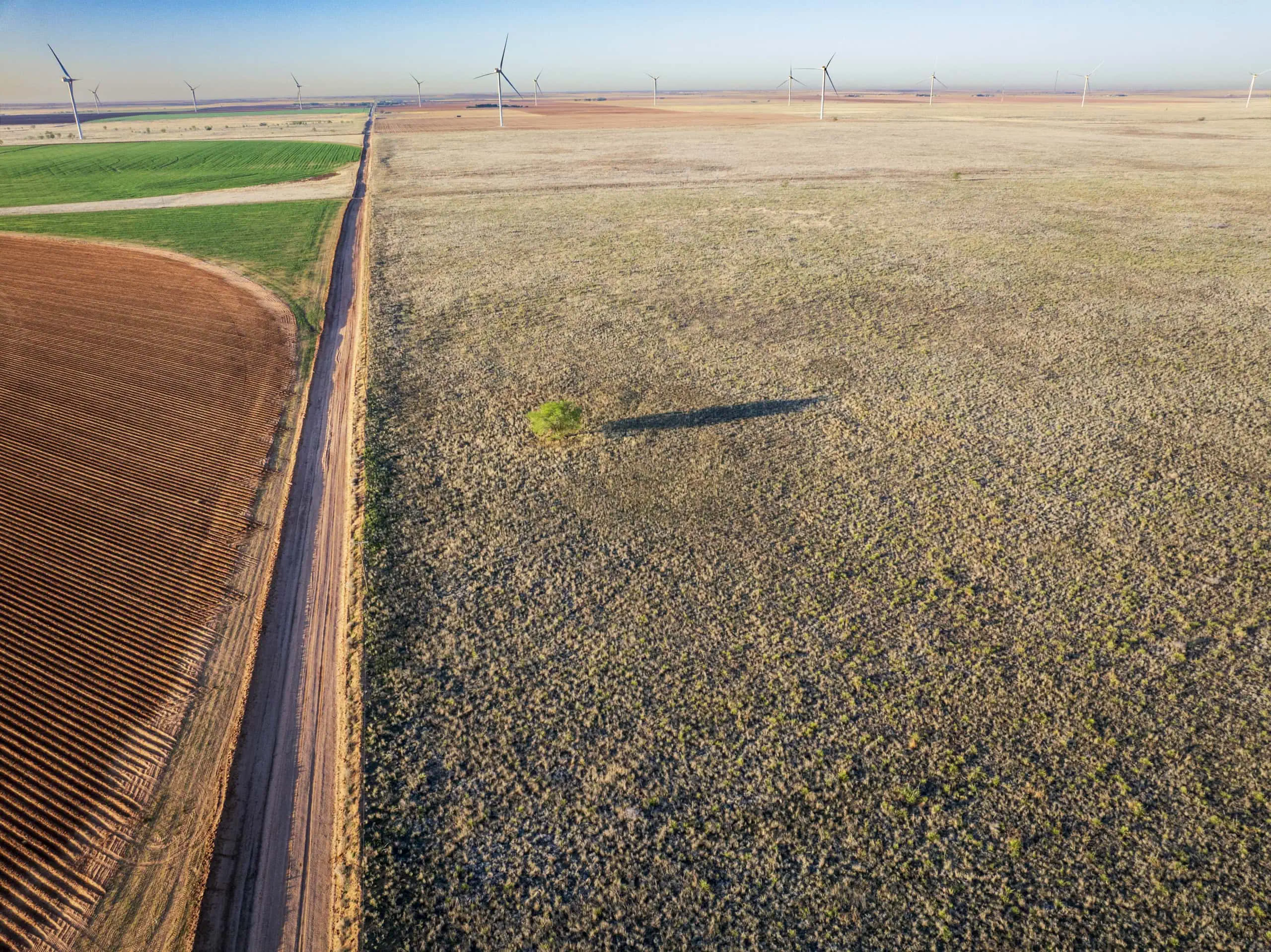
The 2026 midterms handed Democrats both the House and the Senate, the blue wave a lot of landowners had been bracing for. For farm and ranch owners, that raises an obvious question: what happens to the tax rules that keep land from having to be sold just to pay the tax on it?
The short answer is that the date to watch is not 2027. It is 2029.
Why the Blue Wave Changes Nothing Before 2029
A new Congress convenes in January 2027, but it does not write tax law in a vacuum. President Trump holds the veto pen through January 2029. No tax increase clears a veto, so nothing on anyone’s wish list becomes law before then. And even 2029 only matters if the 2028 presidential election puts a signature behind it.
That makes this a planning horizon, not an emergency. Landowners have more than two years of runway. The owners who use it will be in good shape. The ones who wait for certainty will be competing for their attorney’s time in 2028 along with everybody else.
The good news is already law
The 2025 tax law, the One Big Beautiful Bill Act, made a long list of provisions permanent instead of letting them expire:
- The $15 million per person estate and gift tax exemption ($30 million for a married couple), indexed for inflation.
- 100% bonus depreciation on qualifying equipment.
- The 199A qualified business income deduction.
“Permanent” is the key word. Two years ago these had a built in sunset, which forced Congress to act and made doing nothing impossible. Now the default is that current law continues, and changing any of it takes an affirmative vote to remove something landowners already have. The counterweight: tax bills move through budget reconciliation, which needs 51 Senate votes, not 60. The filibuster is not a backstop on tax policy. It never has been.
So here is the honest breakdown of what has been floated. None of it is law, and none is a settled party platform. These are proposals that have surfaced in recent budget frameworks and bills, sorted by what they would do to your tax bill.

The Good
A few proposals would actually help a landowner’s position:
- Biofuel credits. The 45Z clean fuel production credit is the biggest demand-side lever for crops that feed renewable fuel, and the rules still are not final. Extending or expanding it is one of the more likely moves.
- Solar and wind credits. The 2025 law pulled these back. Restoring them matters to anyone out here who has looked at a solar or wind lease or an on-farm install.
- Uncapping SALT. Full deduction of state and local taxes is a clean win in high property tax states, and farm ground carries a lot of property tax.
- ACA subsidy enhancements. Roughly a quarter of farm operators buy marketplace health coverage. Premiums have jumped and the income cliff is back. Restoring the enhanced subsidies would be real money and would take the sharpest edge off year-end income planning.
The Bad
- A higher top income rate, with proposals in the 40% to 50% range.
- Long term capital gains taxed as ordinary income above a threshold, often cited around $1 million, landing north of 40% once the net investment income tax is added. That hits a retiring owner selling ground.
- Caps on 1031 exchanges. One proposal limited deferral to $500,000 per taxpayer, which rewrites every future trade for an operation that has rolled exchanges for years.
- A tighter farm program income test, with an AGI cap near $700,000 that could cut off ARC and PLC for higher-income operators and for landlords above the line. Current rules went the other direction.
- Ending 100% bonus depreciation, the change that would alter equipment timing the fastest.
- Limits on dynasty trusts, forcing a transfer tax at set intervals and undercutting the assumption that a properly drafted trust runs forever.
The Ugly
These are the ones that hit land hardest:
- A lower estate exemption, cut from $15 million back toward the $3.5 million to $5 million range. A farm sitting comfortably under today’s exemption becomes a taxable estate, and land does not pay estate tax without being sold or borrowed against.
- Decoupling the gift and estate exemptions, with a lifetime gift cap around $1 million. This one closes the exit. If the gift exemption drops while the estate exemption sits low, the window to move land to the next generation during life is gone. You cannot fix at death what you failed to move during life.
- Means testing crop insurance subsidies, through per-producer premium caps that have been on the budget-cutting list for years.
- Full 12.4% Social Security tax on all farm income, including pass-through income from LLCs and S corporations. On $400,000 of farm income that is roughly $50,000 a year not currently owed.
One quirk worth knowing
Reconciliation has an asymmetry built in. Provisions that raise revenue can be made permanent. Provisions that cost money usually have to expire inside the budget window. Translation: if a future bill moves, the increases in the Bad and Ugly columns tend to stick, and the sweeteners in the Good column tend to be temporary. Plan for the pain to be the durable part.
What prudent planning looks like now
This is not a push to do anything drastic on the strength of an election result. Proposals are not law, a narrow majority still has to hold its own members together, and farm state legislators have historically been the reason the harshest ag provisions get stripped out of these bills. But the sensible moves are the ones a careful owner should be making anyway:
- Model your estate at a $3.5 million exemption and see what the real number is. Most owners have never run it.
- Review your entity structure now, not in 2028 when every estate attorney has a six month backlog.
- If gifting is part of your long term plan, talk to your advisors about using the current exemption while it sits at $15 million, since the gift window may be the first to close.
- Keep irreversible decisions on the table only after you have run the numbers with your own CPA and attorney.
The planning window is open now. Whatever 2029 brings, the owners who spent the next two years getting their house in order will be glad they did.
This post is general information, not tax or legal advice. Every operation is different, so talk to your CPA and estate attorney before acting. If you are weighing a land purchase, sale, or transfer in West Texas and want to understand how timing shapes your options, reach out to Veritas Land Co.